Electronic, plant-specific manuals with the information operators need and illustrations of your own plant. The manual is the core of our full plant-specific training package.
This is the manual your operators get
Plain steps, drawings of the plant, and the numbers an operator needs. Pick a page below. These sample pages are from our fictional White River WRRF.
Written by operators
Need to know only
Illustrated
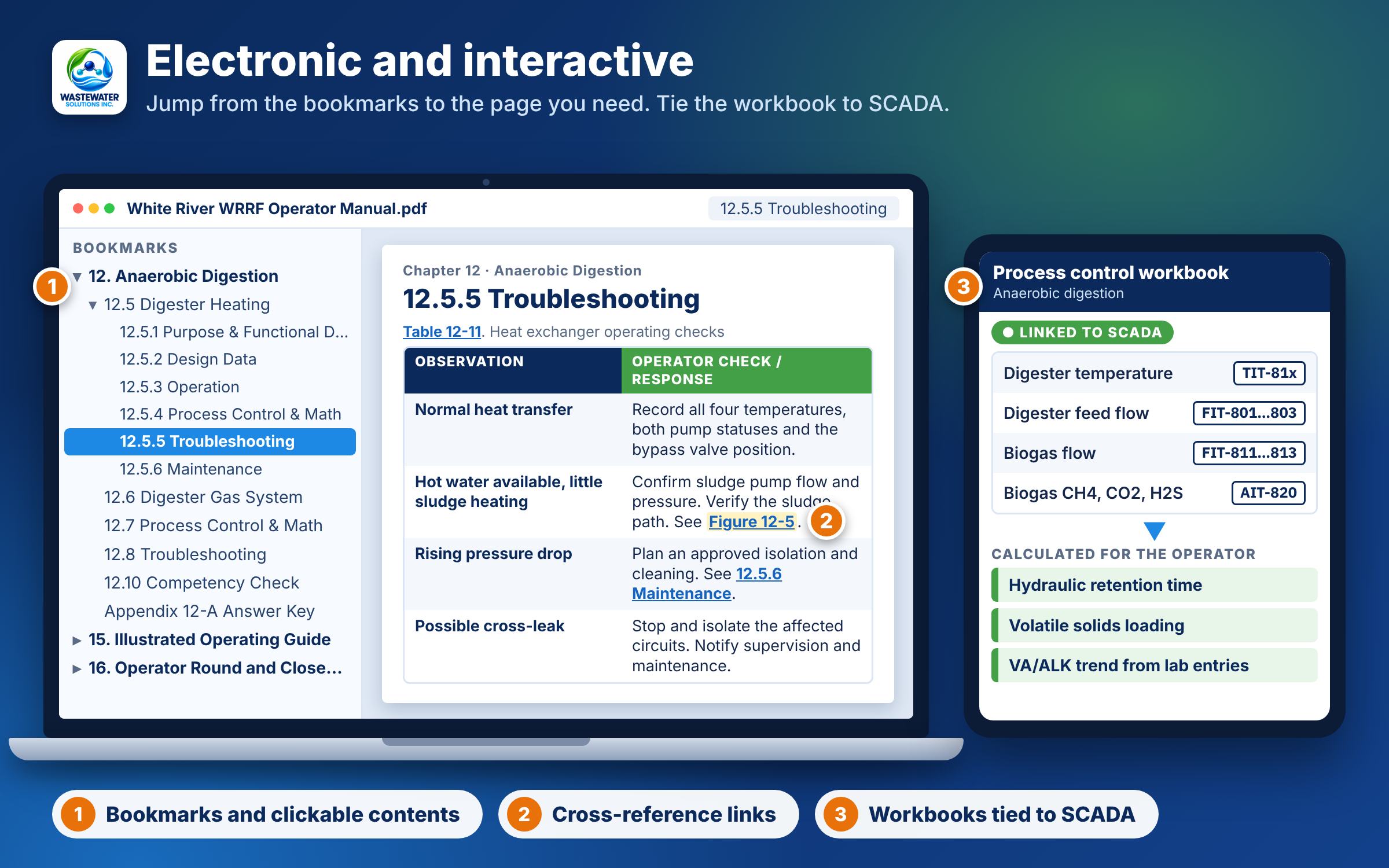
Electronic and interactive
Tied to your plant
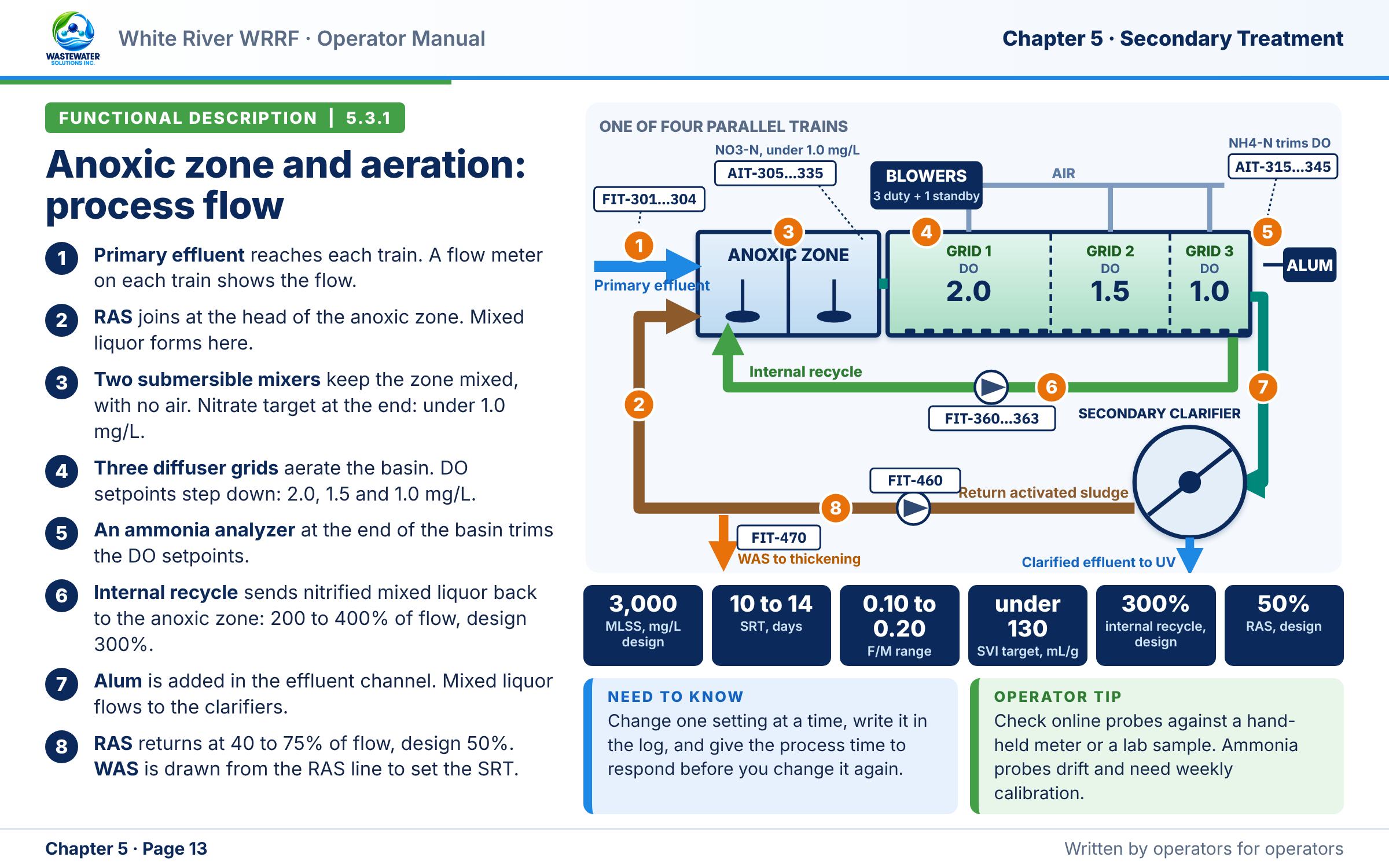
Process flow
Process flow with numbered callouts
Numbered steps match the callouts on the drawing
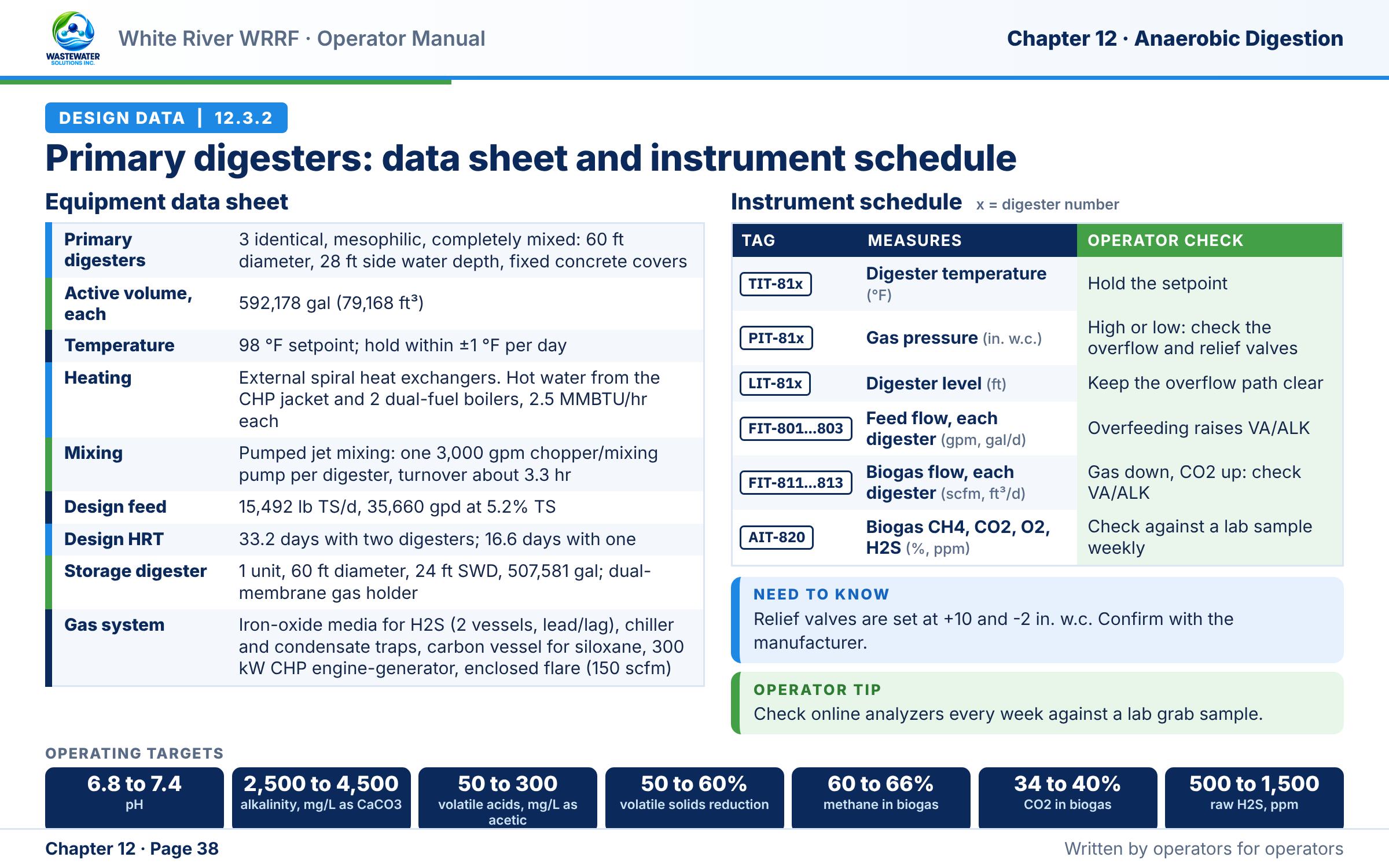
Setpoints and design numbers sit beside the process they control
Instrument tags show where the operator reads each value
Electronic and interactive. Sample page, White River WRRF.
Why operators trust our manuals
We write our manuals to be used on shift. We have been plant superintendents twice, and our manuals are written by operators for operators.
Electronic
Your manual is a file, not a binder. Bookmarks, a clickable contents and links between sections take an operator straight to the section needed.
Interactive
The manual works with our process control workbooks, which are interactive and can be tied to SCADA.
Great illustrations
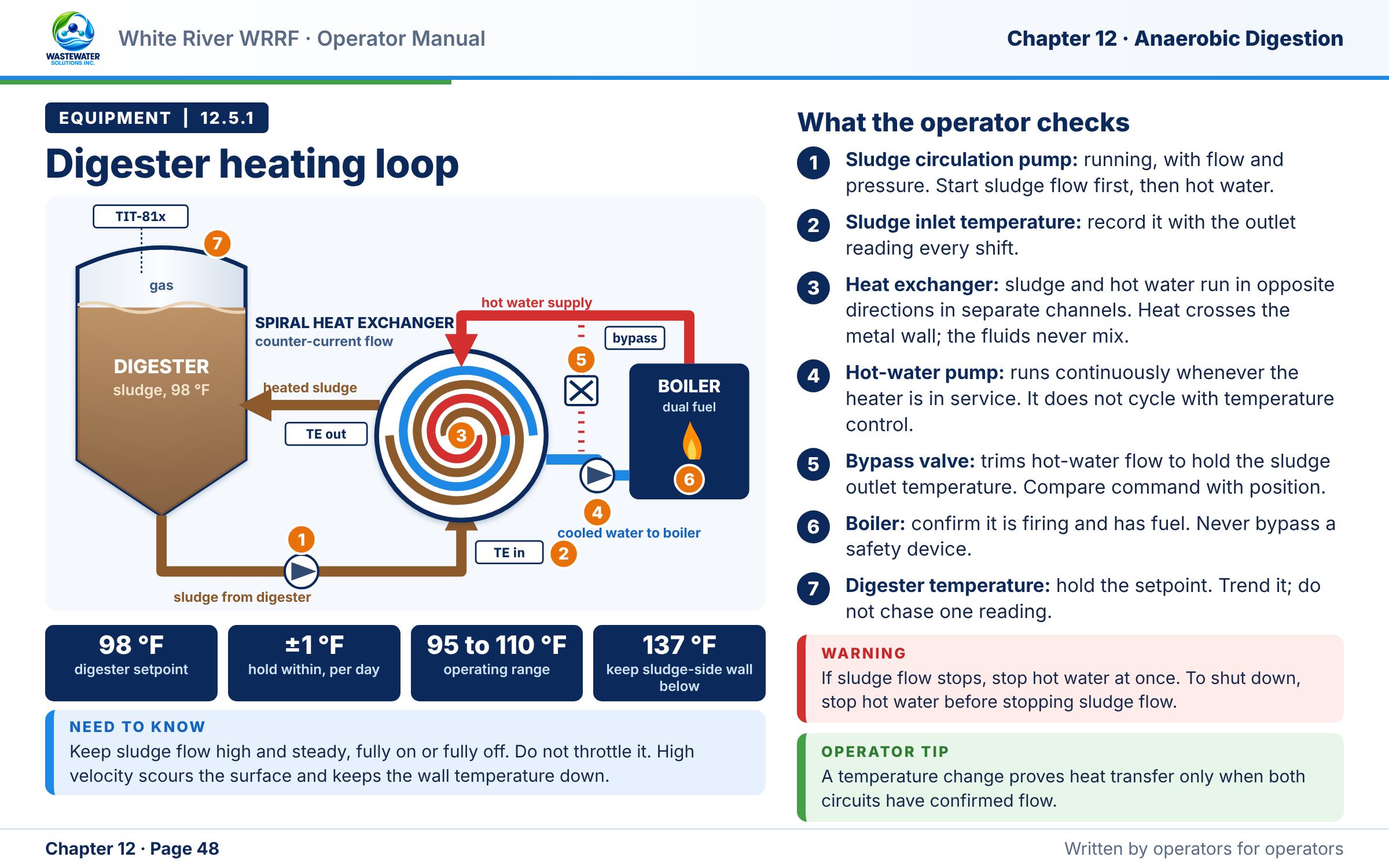
Cutaways and process drawings of your own plant show where the flow goes, which pump serves which tank, and what each valve does.
Need to know
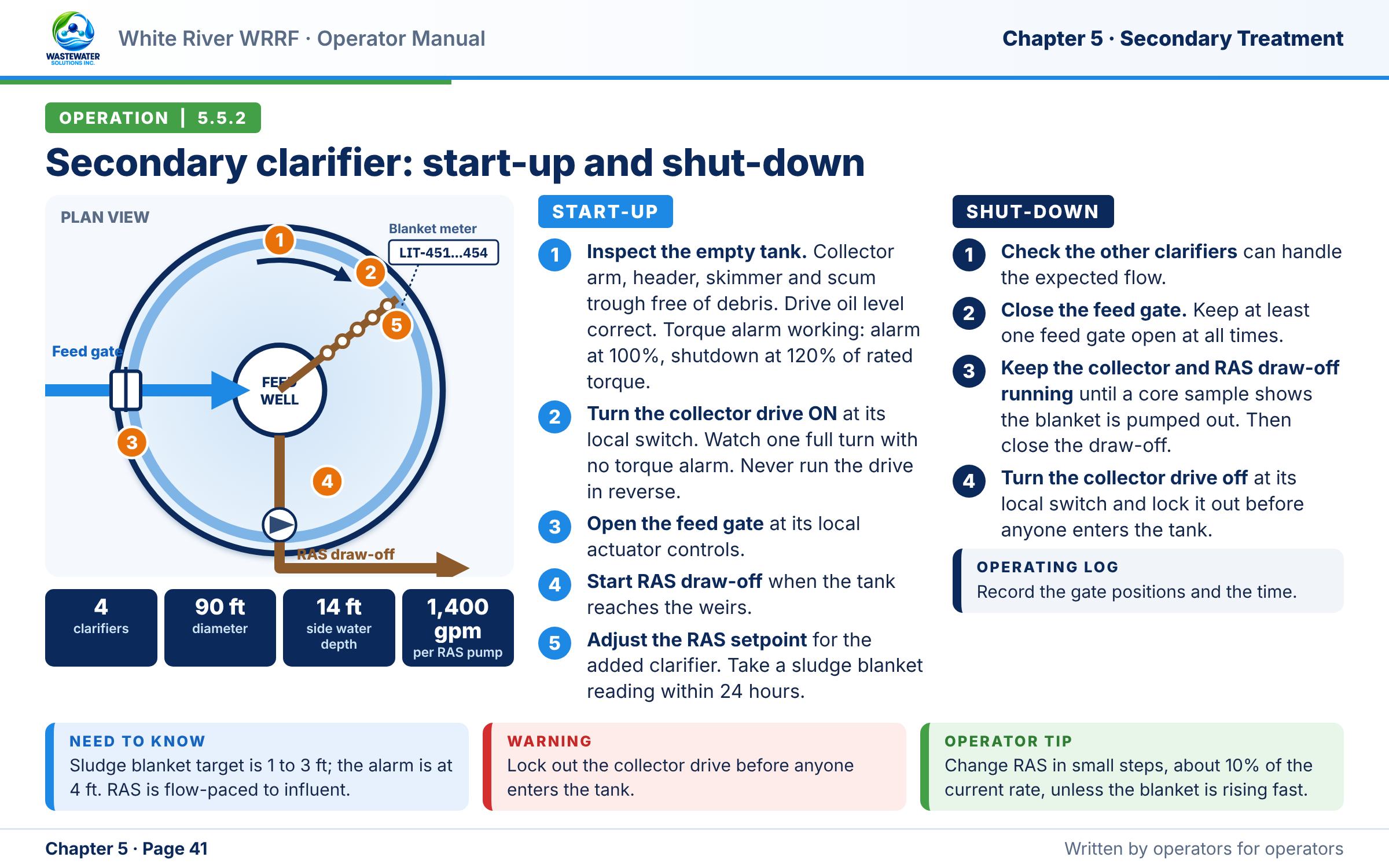
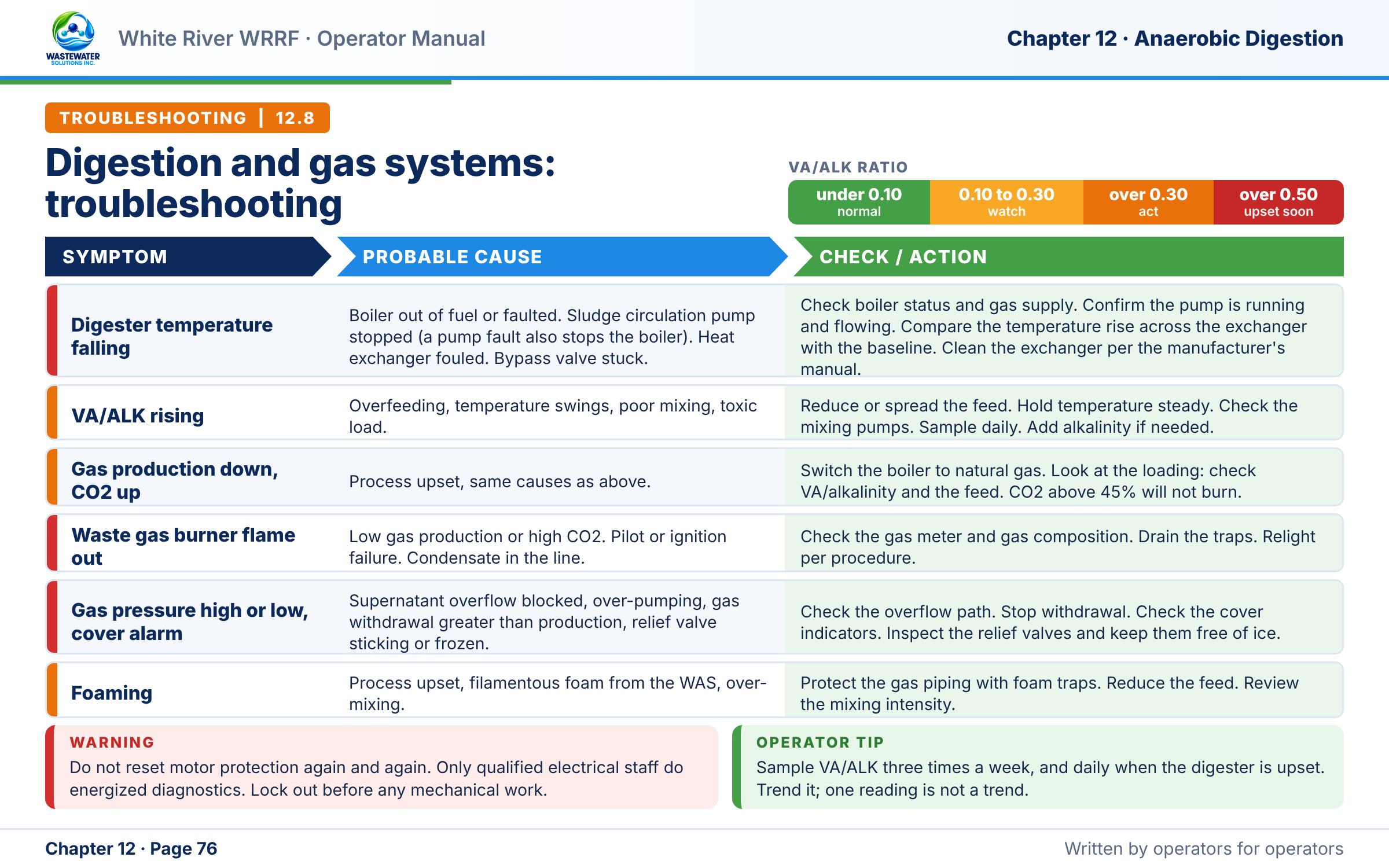
Each process is written the same way, so operators find operation, valve lineups, troubleshooting, maintenance and safety where they expect them.
Written by operators for operators
We have been plant superintendents twice. We write for the operator on shift.
Plant-specific
Built from your drawings, equipment, SCADA screens and the knowledge of your own operators, not a generic template.
What is in a manual
Each process area follows the same outline, so an operator who knows one chapter knows how to read them all.
Section
What it gives the operator
Purpose and functional description
What each process does and how it fits the plant.
Design data
Equipment, capacities, controls, and the power source and lockout point for each unit.
Operation
Startup, shutdown, valve lineups, and how to read the SCADA screens for that process.
Process control and math
What to monitor, the operator math, and a process control spreadsheet.
Troubleshooting
Symptom tables and step-by-step decision trees.
Maintenance and safety
Maintenance by equipment item, plus lockout, confined space and gas safety.
Competency checks
Questions with answer keys, so a new operator can check what they learned.
Daily round and operator forms
Round sheets and review forms that operators fill in and keep.
Illustrations from our manuals
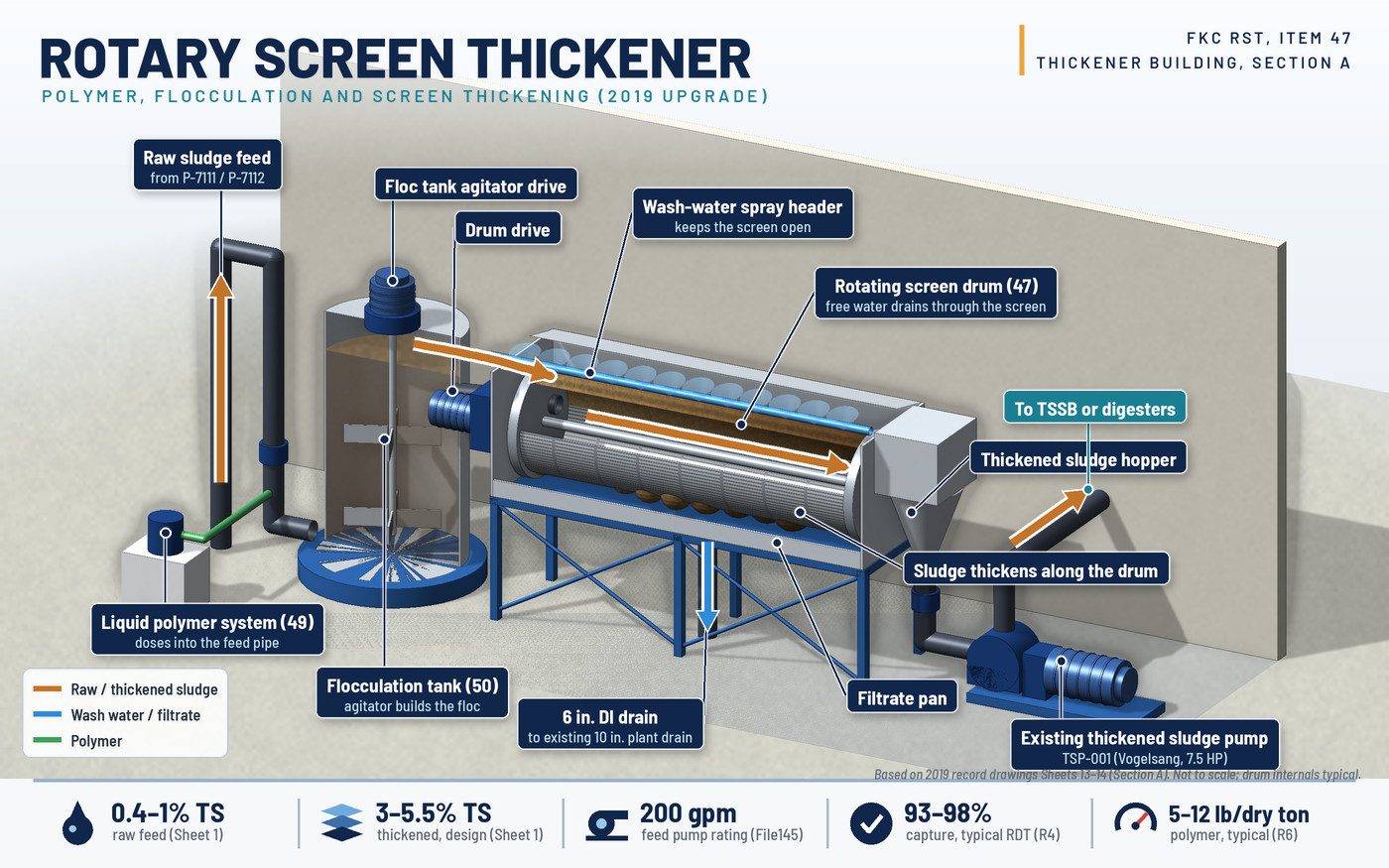
These come from an O&M manual we prepared for an Oregon plant. Each drawing is made for that plant, and each one is there to answer a question an operator asks on shift.
A rotary screen thickener: where the sludge, polymer and wash water go. View full size.
Troubleshooting that follows a method
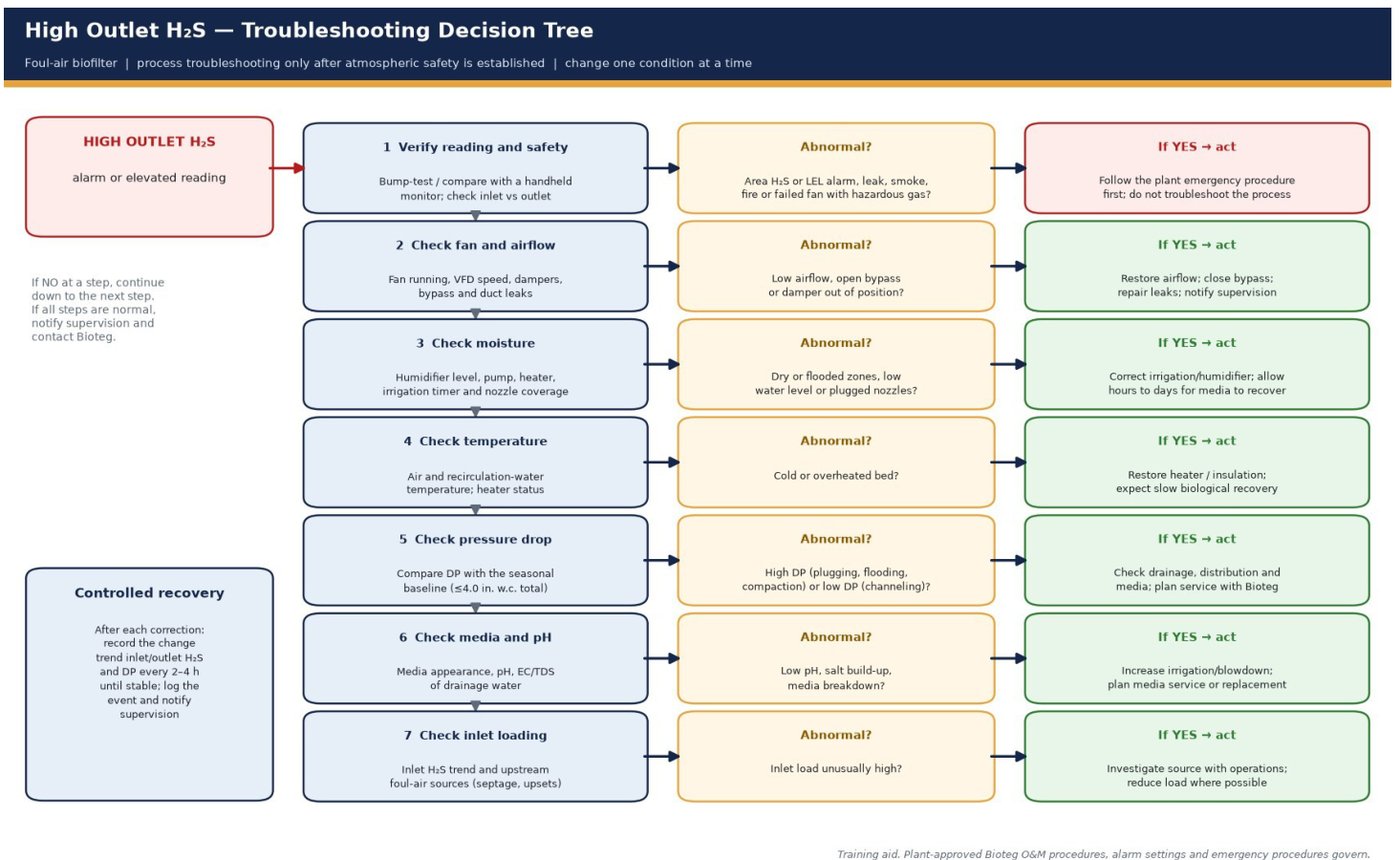
Operators get decision trees as well as tables. This one covers a high hydrogen sulfide reading at an odor control biofilter: check safety first, then one condition at a time.
Troubleshooting decision tree from an odor control chapter. View full size.
Manuals we have written
We have written manuals for plants in Texas, Washington, Oregon, California, Idaho, Indiana, British Columbia and Hawaii, for municipal and industrial plants.
State
Plant
What we did
Texas
Two large city liquid wastewater treatment plants, combined capacity up to 150 mgd
Electronic O&M manuals
Washington
A water district’s two plants: a 10 mgd complete mix activated sludge plant with anaerobic digestion, and a 4 mgd plant with primary treatment, biotowers for secondary treatment and chlorine disinfection
Plant-specific, detailed and complete plant operations manuals
Washington
Resort community SBR plant
We managed development of the O&M manual and wrote the secondary treatment chapter
Washington
Industrial plant
O&M manual
Oregon
Seven plants, one of them for a regional clean water agency
O&M manuals
Oregon
Plant upgrade
O&M manual and operator training, with startup plan input and onsite commissioning
California
City plant
O&M manual
Idaho
City plant
O&M manual
Indiana
10 mgd activated sludge plant
We wrote the O&M manual after the plant’s last upgrade
Indiana
Municipal plant
O&M manual
Indiana
Plant upgrade
O&M manual and operator training, with startup plan input and onsite commissioning
British Columbia
Industrial plant
O&M manual
Hawaii
Phase 1C wastewater plant: HRBC, DAF, solids handling, Cambi B6 THP, Digester 3 and gas systems. Client: City & County of Honolulu
O&M and training manual, plus the training deck and the THP digester operating workbook
Hawaii
Membrane and solids handling facilities. Client: City & County of Honolulu
O&M manual and operator training support
How we write a manual
Kick-offWe meet your team, agree on scope, audience and schedule, and collect your drawings, vendor manuals and existing manuals.
Plant walk-through with operatorsWe walk the plant with the operators who run it and learn how each process is really operated.
Drawings and P&ID reviewWe read the record drawings, P&IDs, SCADA screens and vendor documents, and note where they disagree.
WritingWe write each process the same way: purpose, design data, operation, process control, troubleshooting, maintenance and safety.
Field verification of equipment dataWe check tags, nameplate data and valve lineups in the field. Anything not yet confirmed stays marked until it is.
Operator reviewYour operators read the draft and tell us what to fix. We revise until it reads right to the people who use it.
TrainingWe train your operators from the finished manual, in person at your plant.
The core of the full training package
A manual is one of four parts of our live, plant-specific package: the O&M manual, the training, plant-specific training materials, and process control workbooks that are interactive and can be tied to SCADA. Use the pieces you need, or combine them all.